Used lathes provide essential turning, facing, and threading capabilities for metalworking workshops and maintenance departments. Buying pre-owned manual and capstan lathes, such as British Colchester or Harrison geared models, secures rigid cast-iron beds and proven headstock gearboxes capable of reliable shaft turning without the electronic maintenance overhead of newer production machinery.
Lathes remove material from rotating workpieces to produce cylindrical components, turn tapers, cut standard screw threads, and bore precise inner diameters. Manual center lathes, gap-bed variants, and turret or capstan models handle work ranging from single-piece maintenance jobs to repetitive bushing runs. Key specifications that define capacity include swing over the bed, distance between centers, and through-spindle bore diameter. Swing dictates the maximum workpiece diameter, while center distance limits overall shaft length. The headstock drive arrangement—whether geared or variable speed—determines torque delivery across low RPM ranges for heavy roughing or threading, whereas specialized centering or facing machines prepare shaft ends specifically for subsequent turning operations.
When evaluating a used manual lathe, inspect the induction-hardened bed ways for ridging or uneven wear, particularly within the first twelve inches near the headstock where most carriage travel occurs. Check the cross-slide and compound rest for excessive backlash in the lead screws and nuts, which degrades turning accuracy and thread-cutting repeatability. Open the headstock cover to examine gear teeth for chipping, pitting, and proper oil lubrication flow. Engage the feed rod and lead screw to ensure half-nut engagement is crisp and feeds reverse smoothly without binding. Mount a dial indicator on the spindle nose to measure axial play and radial runout, ensuring the spindle bearings maintain rigidity under cutting loads.
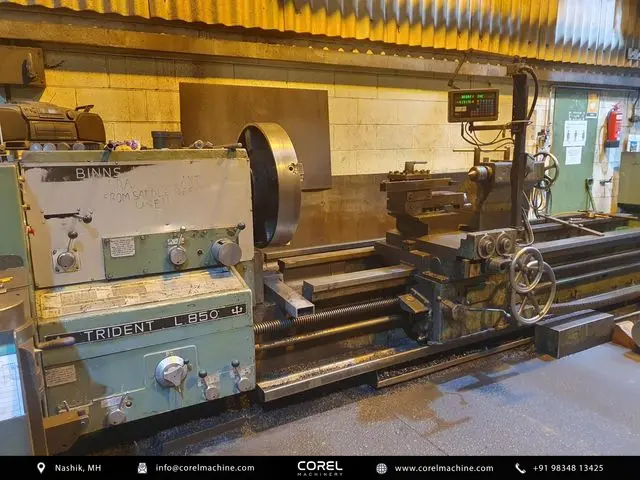
The yard inventory includes geared center lathes and gap-bed models from British builders Colchester and Harrison, featuring Student 1800, Triumph 2000, M300, and M350 models. Available stock also features heavy-duty turning units from Binns & Berry, a Ramo A30 lathe, a Herbert capstan unit for batch production, a Hardinge HC3 precision lathe, and a Hey shaft facing and centering machine. All units can be inspected at the Nashik yard.
Available Now
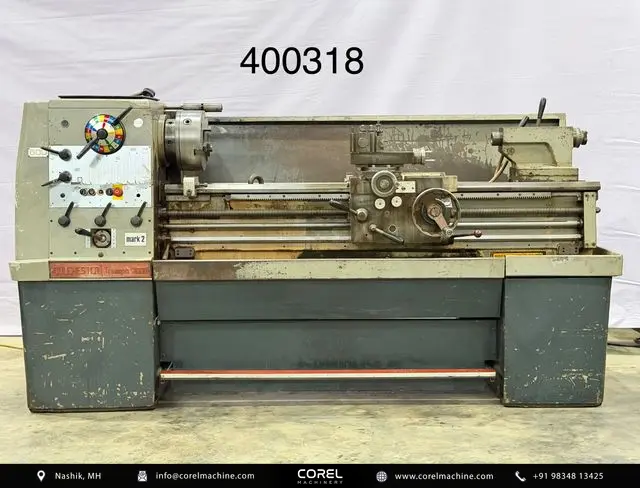
Colchester Triumph 2000 Gap-Bed Lathe
- Stock No.
- 400318
- Capacity
- Ø390 x 1270 mm
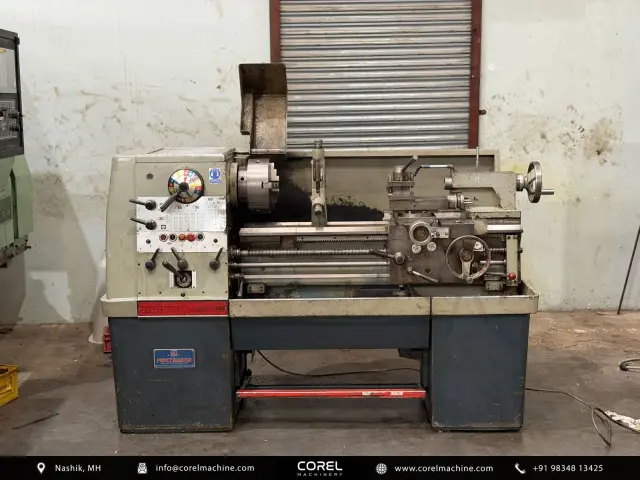
Colchester Triumph 2000 Gap-Bed Lathe
- Stock No.
- 400244
- Capacity
- Ø390 x 760 mm
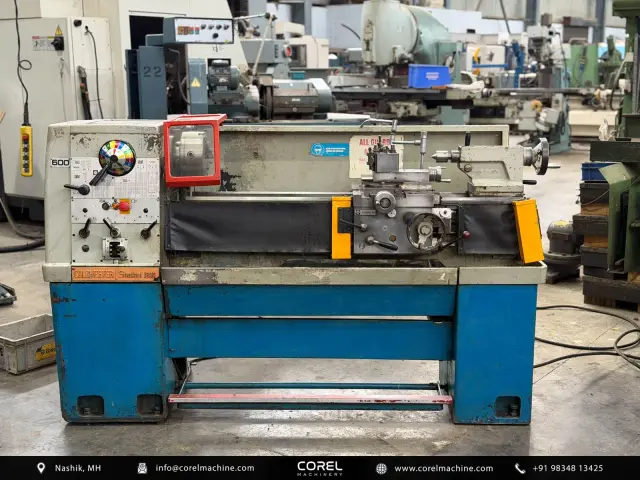
Colchester Student 1800 Geared Lathe
- Stock No.
- 400243
- Capacity
- Ø330 x 1020 mm
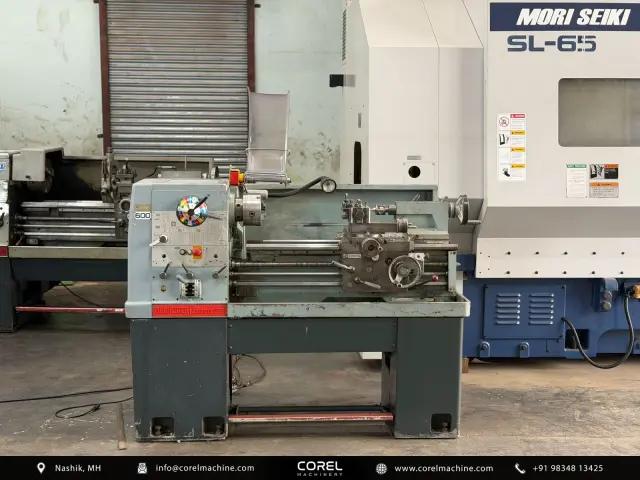
Colchester Student 1800 Geared Lathe
- Stock No.
- 400242
- Capacity
- Ø330 x 650 mm
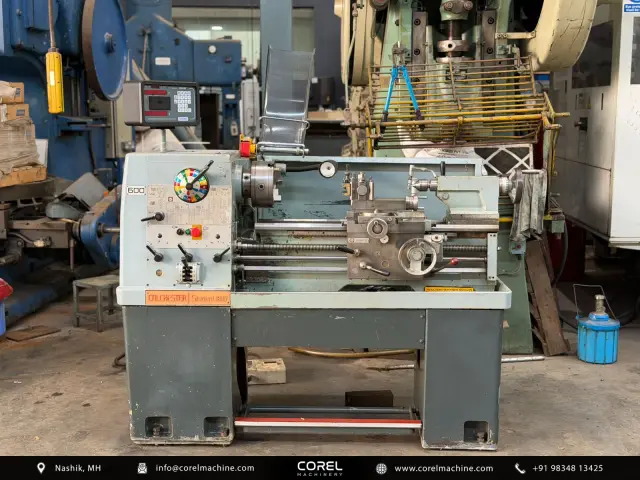
Colchester Student 1800 Geared Lathe
- Stock No.
- 400241
- Capacity
- Ø330 x 650 mm
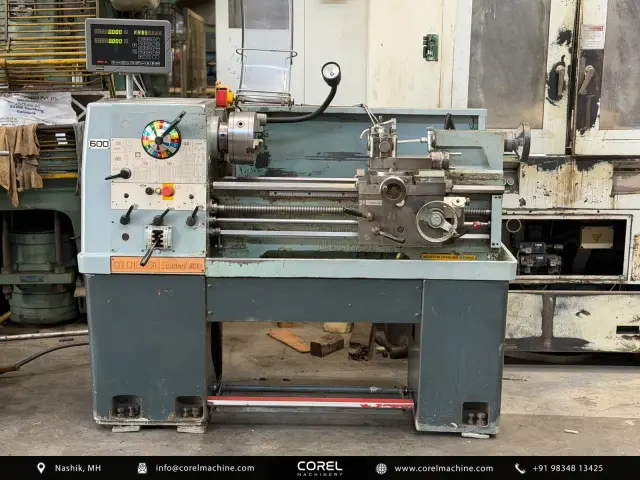
Colchester Student 1800 Geared Lathe
- Stock No.
- 400240
- Capacity
- Ø330 x 650 mm
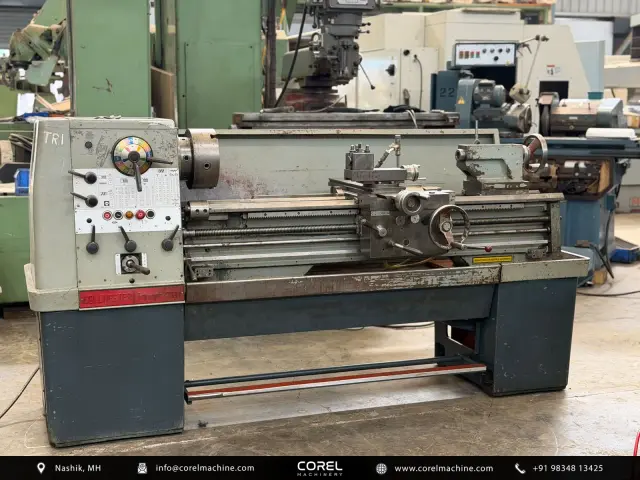
Colchester Triumph 2000 Gap-Bed Lathe
- Stock No.
- 400230
- Capacity
- Ø390 x 1270 mm
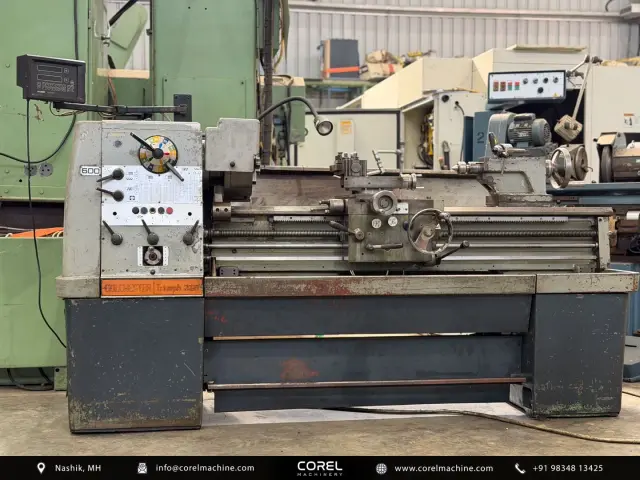
Colchester Triumph 2000 Gap-Bed Lathe
- Stock No.
- 400222
- Capacity
- Ø390 x 1270 mm
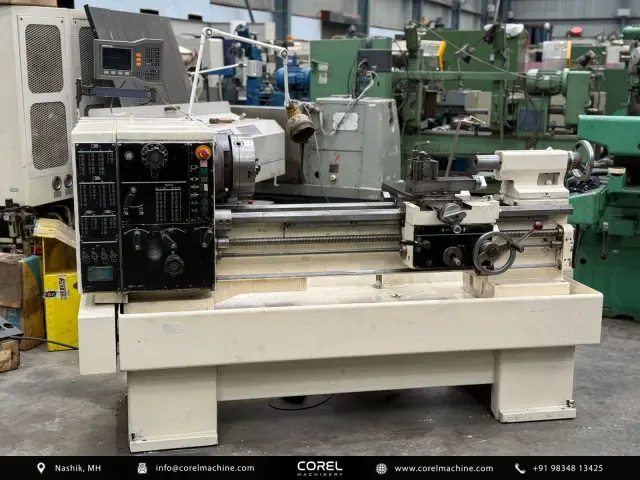
Harrison M350 Geared Lathe
- Stock No.
- 400167
- Capacity
- Ø380 X 1000 MM
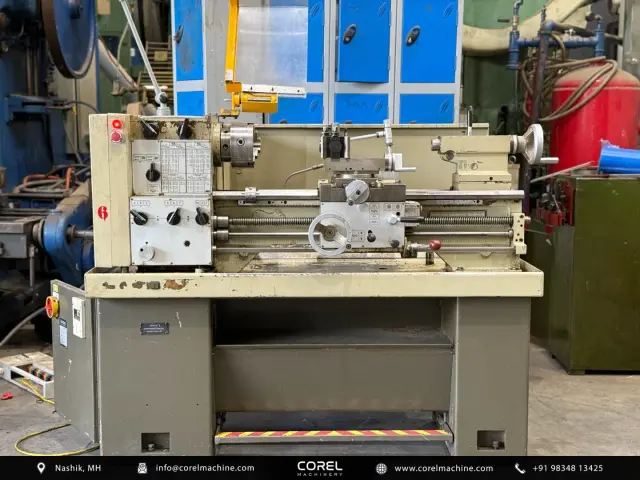
Harrison M300 Geared Lathe
- Stock No.
- 400127
- Capacity
- Ø330 X 635 MM
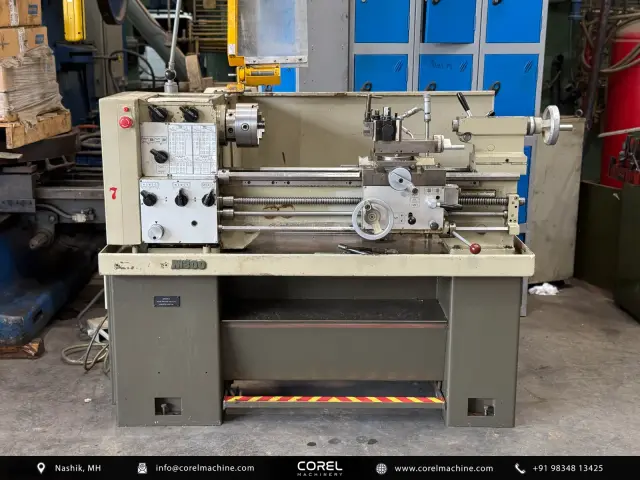
Harrison M300 Geared Lathe
- Stock No.
- 400124
- Capacity
- Ø330 X 635 MM
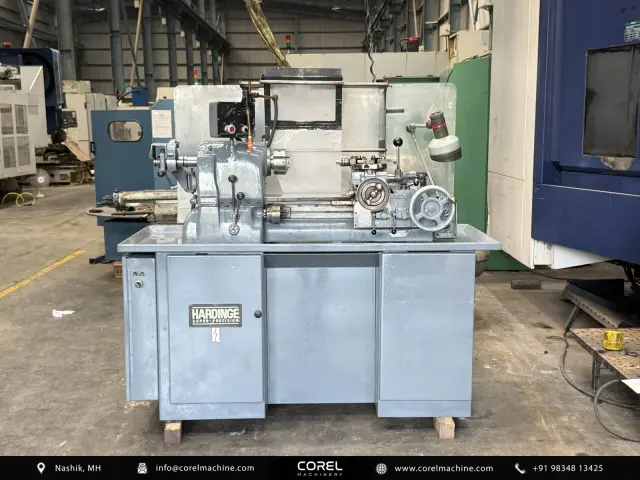
Hardinge HC3 Super Precision Lathe
- Stock No.
- 400123
- Capacity
- —
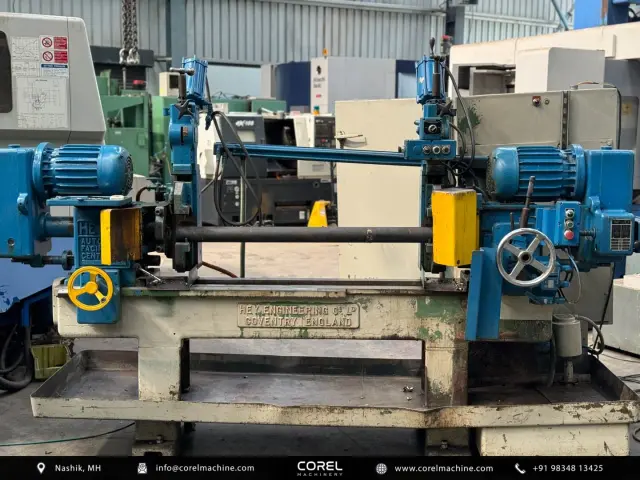
HEY Facing Centering Machine (Ø100 x 1300 mm)
- Stock No.
- 311116
- Capacity
- Ø100 x 1300 mm
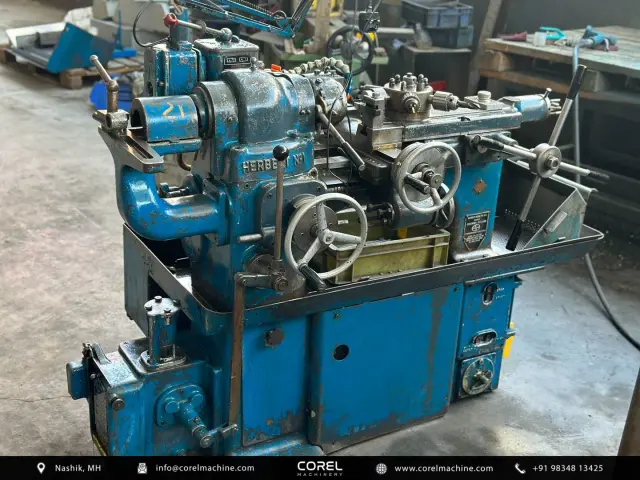
Herbert No 1 Capstan Lathe
- Stock No.
- 4110
- Capacity
- —
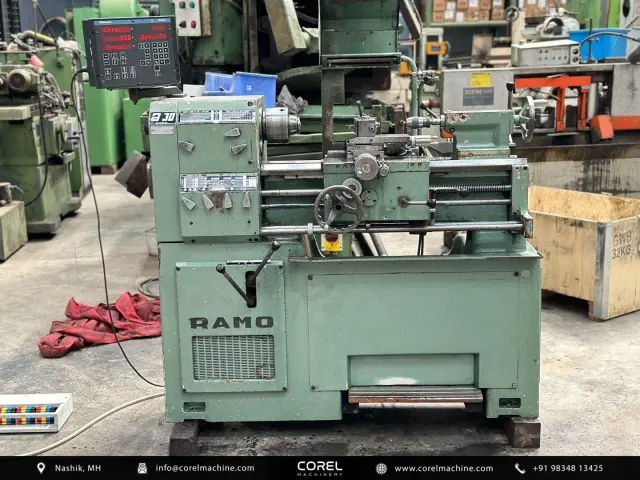
Ramo A30 Lathe
- Stock No.
- 3759
- Capacity
- Ø305 x 500 MM
Incoming (Transit/Inspection)
Used Lathe Machines delivered across India
Used and second hand lathe machines from our Nashik yard are running on shop floors in Pune, Mumbai, Nashik, Kolhapur, Aurangabad, Bengaluru, Hosur, Chennai, Coimbatore, Delhi NCR, Faridabad, Ludhiana, Rajkot and Ahmedabad. We ship anywhere in India and export worldwide.
Frequently Asked Questions
What is the practical benefit of a gap-bed lathe like the Colchester Triumph 2000?
A gap-bed lathe features a removable bed section directly in front of the headstock spindle. This allows workshops to swing large-diameter workpieces, such as flanges, brake drums, and pump impellers, without needing a larger, heavier machine footprint.
How does a capstan lathe differ from a standard center lathe on the shop floor?
A capstan lathe replaces the conventional tailstock with a multi-station indexing turret mounted on an auxiliary slide. This arrangement allows rapid sequential operations like drilling, reaming, chamfering, and external turning on repetitive batch work without swapping individual tool posts.
Why is the through-spindle bore diameter a critical parameter when selecting a lathe?
The spindle bore size dictates the maximum bar stock diameter that can feed entirely through the headstock for chucking. If your work involves turning long shafts from raw bar stock without pre-cutting, a larger bore diameter prevents having to support the workpiece entirely between centers.
What features make toolroom lathes like the Hardinge HC3 suitable for instrument work?
Toolroom lathes are built with closer machining tolerances, super-finished spindle bearings, and collet closers designed for secondary operations on small parts. They prioritize minimal spindle runout and fine compound feeds over the high-torque roughing capacity of large engine lathes.