Used press machines supply controlled mechanical or hydraulic force for sheet metal blanking, forming, coining, and shaft straightening. Selection hinges on rated tonnage, bed area, and daylight opening. Stock at Corel Machinery features mechanical and hydraulic models from builders like Cincinnati Milacron, Hare, and Hi-Ton for workshop punching, assembly, and metal forming tasks.
Industrial presses deliver high forces to shear, bend, pierce, or assemble workpieces within matched tooling. Mechanical power presses rely on flywheels, crankshafts, and friction clutches to drive strokes at fast, fixed cycle speeds ideal for progressive die stamping. Hydraulic presses utilize hydraulic cylinders, directional valves, and fluid power to deliver full rated tonnage throughout the entire stroke distance, suiting deep drawing, cold forming, and component pressing. Key differentiating specifications include rated pressing capacity in metric tons, stroke length, shut height or daylight opening, throat depth on C-frame units, and bed dimensions. These dictate maximum tool footprint, part draw depth, and tonnage safety margins.
When assessing a used mechanical press, inspect the clutch and brake engagement for slip or delayed release. Check the crankshaft journals, pitman connection, and ram gib guides for excessive play that causes die misalignment. On hydraulic models, inspect the main cylinder chrome rod for scoring, check cylinder packing and manifold seals for fluid bypass, and verify that the pump holds operating pressure without cavitation. Measure bed and ram bolster surfaces for dishing, weld scars, or deformed T-slots. Compare shut height against your die set heights, and confirm the daylight provides adequate clearance for part feeding, scrap shedding, and material handling gear.
The current press selection includes heavy mechanical and fast hydraulic machinery. Capacities span from 8-ton hydraulic units up to a 150-ton Cincinnati Milacron DPC-6 vertical power press. The lineup features bench and floor-mounted hydraulic presses from Hare and John Mills, a Gordon Mason Edwards 25-ton vertical power press, and dedicated 8-ton Hi-Ton units, including a specialized shaft straightening press. All machines can be inspected at the Nashik yard.
Available Now
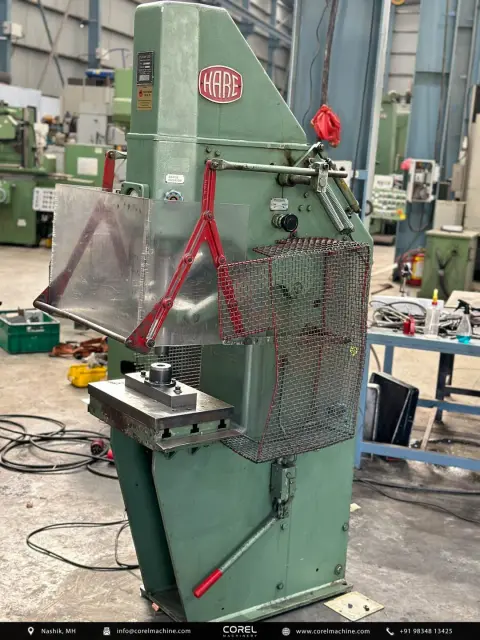
Hare 15T Hydraulic Press
- Stock No.
- 3783
- Capacity
- 15 T
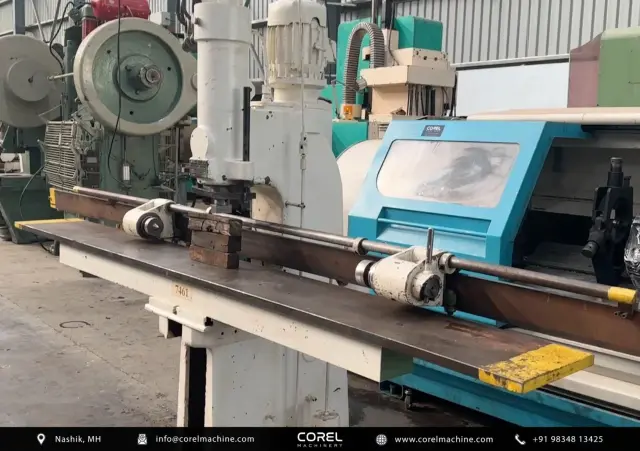
Hi-Ton 8T Hydraulic Straightening Press
- Stock No.
- 3599
- Capacity
- 8 T
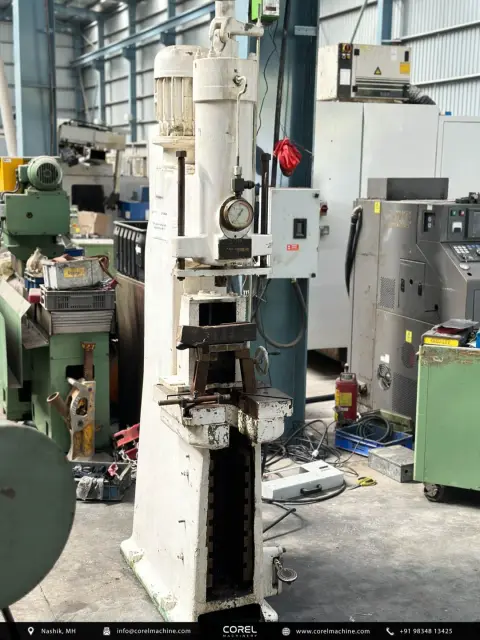
Hi-Ton 8T Hydraulic Press
- Stock No.
- 3594
- Capacity
- 8T
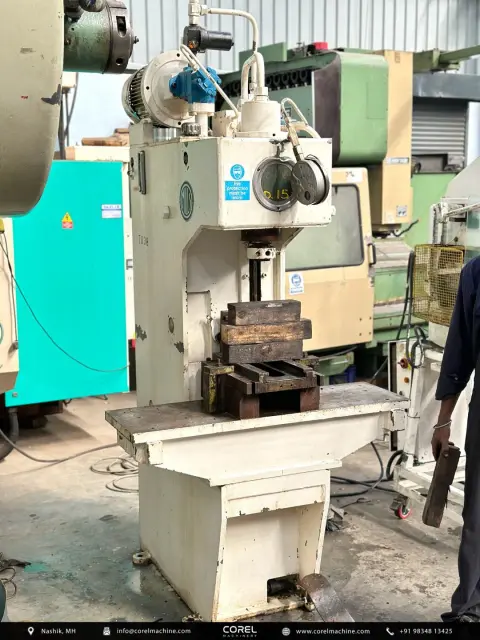
John Mills 15T Hydraulic Press
- Stock No.
- 3589
- Capacity
- 15 T
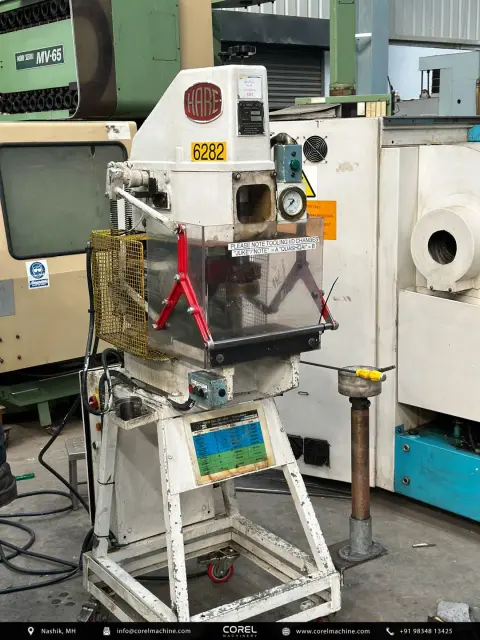
Hare 5BS Hydraulic Fast Action Press
- Stock No.
- 3575
- Capacity
- 7.5T
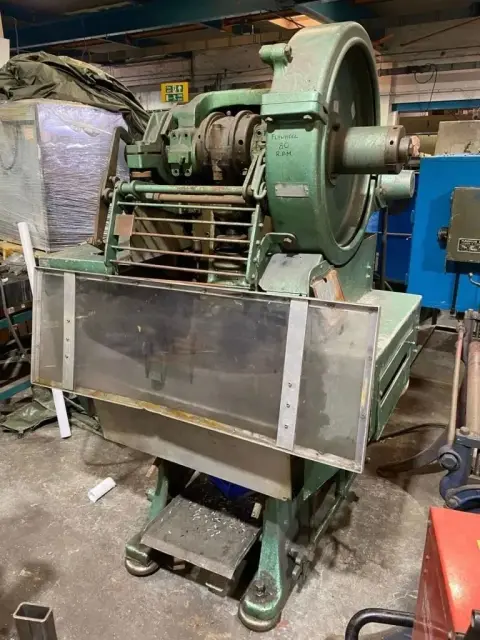
Gordon Mason Edwards 25 Ton Vertical Power Press
- Stock No.
- 3081
- Capacity
- 25 T
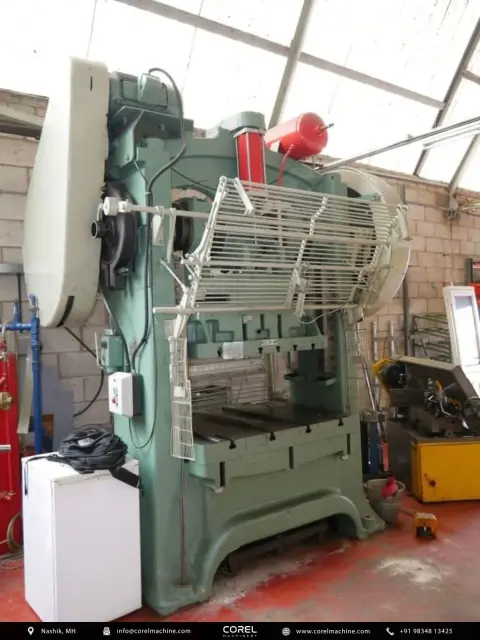
Cincinnati Milacron DPC-6 150 Ton Vertical Power Press
- Stock No.
- 3078
- Capacity
- 150 T
Used Press Machines delivered across India
Used and second hand press machines from our Nashik yard are running on shop floors in Pune, Mumbai, Nashik, Kolhapur, Aurangabad, Bengaluru, Hosur, Chennai, Coimbatore, Delhi NCR, Faridabad, Ludhiana, Rajkot and Ahmedabad. We ship anywhere in India and export worldwide.
Frequently Asked Questions
What is the key functional difference between the vertical power presses and hydraulic presses on this page?
Vertical power presses like the Cincinnati Milacron and Gordon Mason Edwards deliver fast, cyclic strokes where maximum tonnage is concentrated near the bottom dead center. The Hare, Hi-Ton, and John Mills hydraulic units exert their full rated tonnage across the entire stroke, allowing adjustable pressure and dwell times suited for straightening and drawing.
What setup features make the Hi-Ton straightening press different from standard assembly presses?
Straightening presses feature open table beds with adjustable anvil blocks, centering supports, and dial gauge mounts to measure shaft runout. Their hydraulic circuits allow sensitive ram jog control, letting operators apply incremental downward deflection without overbending the workpiece.
How do ram gib adjustments affect tooling life on a mechanical press?
Worn or loose ram gibs allow lateral deflection during punch impact, causing uneven die clearance, excessive punch wear, and burred cut edges on stamped parts. Proper gib clearance maintains strict perpendicularity between the ram face and bolster plate throughout the stroke.
What factors determine the selling price of used press machines?
Price depends primarily on rated tonnage capacity, physical frame rigidity (C-frame versus straight-side), bed dimensions, and hydraulic pump or mechanical clutch condition. Specialized accessories such as bolster plates, straightening fixtures, and light curtains also affect value.