Used vertical turning lathes and jig borers handle heavy turning, facing, and precise hole location on large castings or forgings. Gravity supports heavy workpieces on a horizontal chuck, eliminating overhang deflection. Machines from Webster Bennett and Hauser provide the rigid column structures and stable tables required for heavy industrial machining.
Vertical turning lathes and borers turn, bore, and face heavy cylindrical workpieces that are difficult to mount on horizontal lathes. Placing the faceplate or table horizontally lets gravity hold the workpiece against the chuck face, reducing clamp distortion and spindle strain. Key design variations include single column models and elevating rail configurations that expand vertical clearance for tall castings. Precision jig borers differ by focusing on tight spatial tolerances, fine pitch lead screws, and accurate hole spacing across flat or box-type components. When comparing machines, table diameter, vertical height under the rail, rail travel, and spindle speeds determine the maximum swing and cutting envelope.
When evaluating a used vertical turning lathe, check the table thrust bearings for play and uneven wear, as table tilt directly affects turning taper. Inspect the cross-rail elevation screws and bed ways for score marks or uneven wear patterns caused by heavy chips. On elevating rail models, confirm that the rail clamping mechanism locks square to the vertical column. Check the turret indexing mechanism and tool slide gibs to ensure repeatable positioning without head sag. For precision jig boring machines, inspect the coordinate table lead screws or optical scales for back-lash and positional wear across full stroke travel.
The inventory features Webster Bennett vertical turning lathes alongside a Hauser jig boring machine. Available configurations include single column units with manual tool slides and elevating rail models that accommodate deeper work envelopes across 36-inch and 48-inch table capacities. These machines offer solid manual controls suitable for heavy turning and toolroom boring tasks. All machines are available for physical inspection at our Nashik yard before purchase.
Available Now
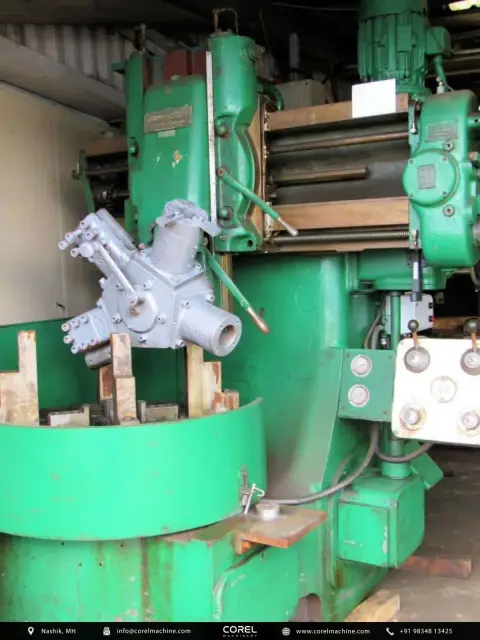
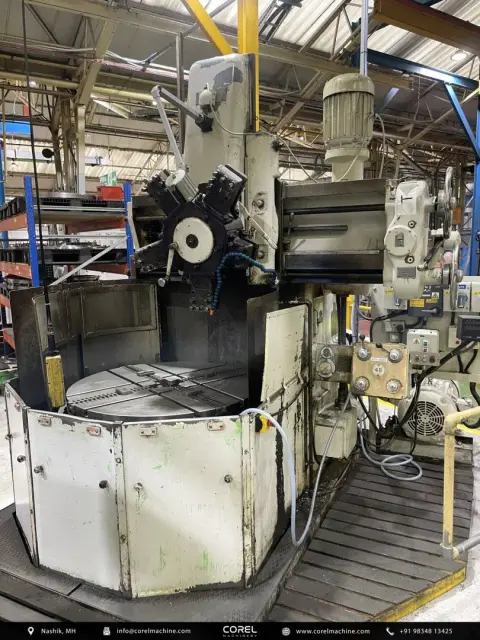
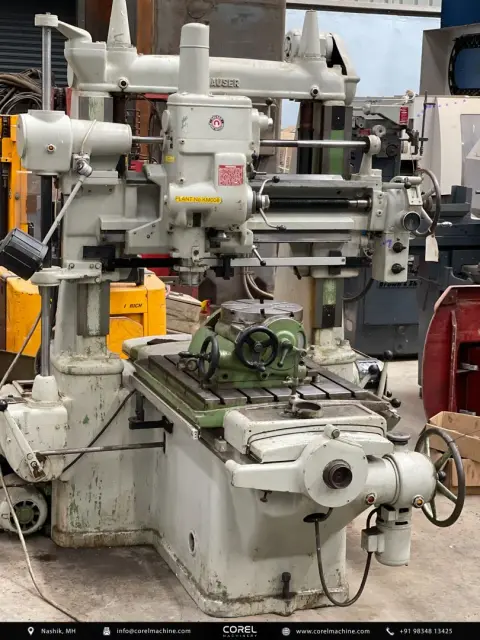
Incoming (Transit/Inspection)
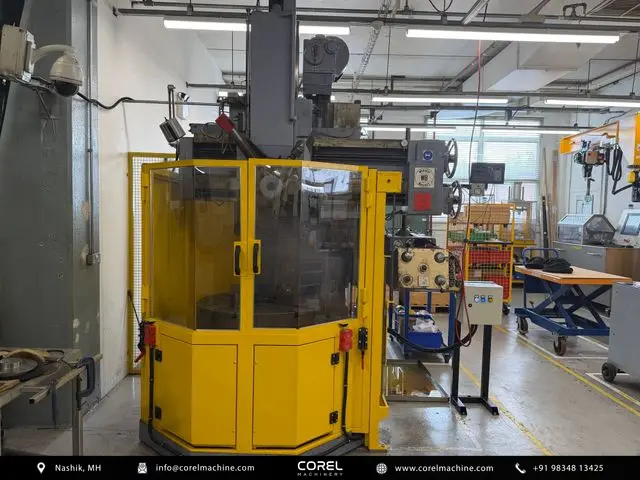
Used VTL & Boring Machines delivered across India
Used and second hand VTL & boring machines from our Nashik yard are running on shop floors in Pune, Mumbai, Nashik, Kolhapur, Aurangabad, Bengaluru, Hosur, Chennai, Coimbatore, Delhi NCR, Faridabad, Ludhiana, Rajkot and Ahmedabad. We ship anywhere in India and export worldwide.
Frequently Asked Questions
What is the advantage of an elevating rail on a Webster Bennett VTL?
An elevating rail allows the cross-rail to move vertically up and down the main column. This increases the maximum height under the tool slide, enabling the operator to machine tall workpieces without using excessively long overhang tooling.
How does a vertical turning lathe differ from a horizontal boring machine?
A VTL rotates the workpiece on a flat horizontal table while tools move vertically and horizontally. A horizontal boring machine rotates the cutting tool inside a stationary or table-fed workpiece, making it better suited for offset holes and prismatic parts.
What key alignment checks should be made on a single column VTL?
Verify that the vertical column stays square to the table surface throughout the full travel of the ram. You should also check for table runout and axial end play in the main spindle thrust assembly.
What role does a Hauser jig borer serve compared to a heavy VTL?
While a VTL focuses on heavy turning and facing of large cylindrical parts, a Hauser jig borer is designed for high-accuracy hole positioning, jig making, and precise coordinate boring on smaller toolroom components.